
- News
- NRI News
- Citizen Journalists News
- NRI cultural meet in Saudi Arabia seeks revival of Indian dramatic arts
This story is from March 31, 2015
NRI cultural meet in Saudi Arabia seeks revival of Indian dramatic arts
NRI theatre lovers in Saudi Arabia have expressed concern over the dying art of theatre during a recent discussion titled “The drama begins with the next bell” by the Riyadh-based cultural organisation, IDAM.

original productions and the addressing of issues concerning the common man, the speakers added.
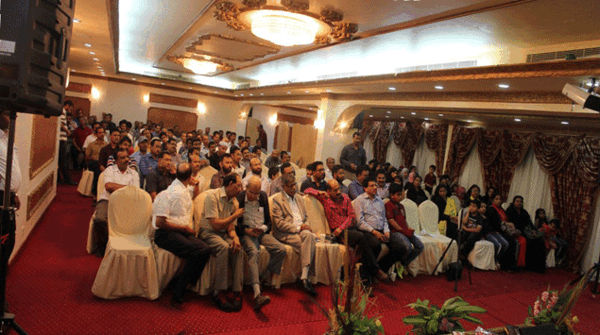
The audience at “The drama begins with the next bell” in Riyadh
Speaking on the occasion, cultural activist Jayachandran Neruvambram said, “The Seventies witnessed a unique experimental theatre movement known as indigenous theatre that spread throughout India, spearheaded by legendary theatre personalities like Girish Karnad, Shivaram Karanth, Kavalam Narayana, Utpal Dutt and Habib Tanvir. The movement was a genuine and creative exercise of dramatic representation based on the vibrant practicing traditions and directives as prescribed in the Natyasastra, the authoritative text on Indian aesthetics. The earlier productions were influenced by regional artistic and folk traditions comprising a variety of music, dance and theatre forms. It made a lasting impact on society for sometime, but the lack of second-level creative artists and cheap imitations of original productions forced the indigenous theatre movement into oblivion.”
Jayachandran said productions with progressive themes were a great source of inspiration for the renaissance movements in Kerala and also for creating socialistic consciousness among people, which culminated in the formation of the first democratically elected Communist government in 1957. But such politically active professional drama troupes gradually showed signs of degeneration and slipped into populism and elitism.
Another speaker, Iqbal Kodungallur, said amateur theatre movement is still vibrant in some parts of Kerala, and cited quite a few productions that he’d seen recently in Kerala and the Gulf. He said people in rural India still like watching plays and appreciated the solidarity shown by theatre artists in Kerala for upholding the freedom of expression by staging a 21-km-long street play as a mark of protest against the banning of a play by the state government.
Noted social activist R.Muraleedharan said indigenous theatre movement was still alive and well. Crowd-pulling plays presented by the Kerala Science & Literature Movement by utilizing the forms of indigenous theatre, epic theatre and street plays could be considered proof of great success.
Other speakers and participants at the cultural meet included Siddique Abubacker, Siddique Nilambur, Rasool Salam, Raju Philip, Beena Faisal, Sanath, Sheeba Raju, M. Faisal, Pramod Kozikkod, Sharon Sherif, Shyju Chemboor, Anil Kumar and Shyam Pandalam.
End of Article
FOLLOW US ON SOCIAL MEDIA
Photostories

Hot Picks
TOP TRENDING
Popular Categories
Hot on the Web
Top Trends
Stock Market TodayBasit AliBrittany MahomesRavichandran AshwinBabar AzamKanpur Test Match RecordsUGC NET Result 2024Tirupati LadduIndia T20 WC SchedulePPF CalculatorBryonna Burrows Net WorthWomen T20 World Cup Points TableWomen T20 World Cup ScheduleIND vs PAK T20 WC MatchDiddyTop Management Colleges of IndiaLive Cricket Score
Trending Topics
GovindaNavratri Colours 2024Solar Eclipse 2024 TimesNavratri WishesGandhi Jayanti WishesDevara CollectionGOAT OTT ReleaseGandhi Jayanti 2024Rajinikanth Health UpdateNavratri HistoryDevaraGovinda NewsDevara Movie ReviewHealthy RaitasSwatantrya Veer SavarkarColdplay India tour 2025Upcoming Smartphones In OctoberAmazon SaleSony Bravia 55 inch 4k Ultra HD TVWordle Answer
Living and entertainment
Latest News
Zodiac Signs as Romantic Movie CouplesFormer WWE Champion Jeff Hardy talks about “addiction struggles”Qualifier Yash upsets second seed Manish at Fenesta Open'Scam marathon' under JMM-Congress-RJD rule 'biggest obstacle' to Jharkhand's development: PM ModiPopulation of Hindus & tribals declining in Jharkhand, says PM ModiChange Begins Here, as TOI shines a spotlight on hope and impactWHO chief praises PM Modi on 10th anivarsary of Swachh Bharat missionNasa switches off instrument on Voyager 2 spacecraft to save powerKTR reason for Naga-Samantha divorce, says Telangana minister; sparks rowIndian cinema has a rich legacy of storytelling: Rana DaggubatiAre 3 senior Karnataka mantris jockeying for chief minister's chair?Why record gold loan growth has RBI worriedBest Leather Wallets for Men in 2024: Timeless EleganceCSS Profile: 5 steps for US students to fill up this financial aid form successfullyNavratri colours 2024: Know the colour for each day of the Shardiya NavratriWatch: Kareena Kapoor and Saif Ali Khan step out shopping with Taimur and Jeh in matching outfitsThe script of Kishkindha Kaandam excited me as much as it shook me: VyshnaviWorld's oil market unbalanced amid Iran-Israel tensions, will it affect India as well?
Copyright © 2024 Bennett, Coleman & Co. Ltd. All rights reserved. For reprint rights: Times Syndication Service